



Гипербарическая оксигенация улучшает двигательные симптомы, Спать, and Cognitive Function in Parkinson's Disease
2026-01-15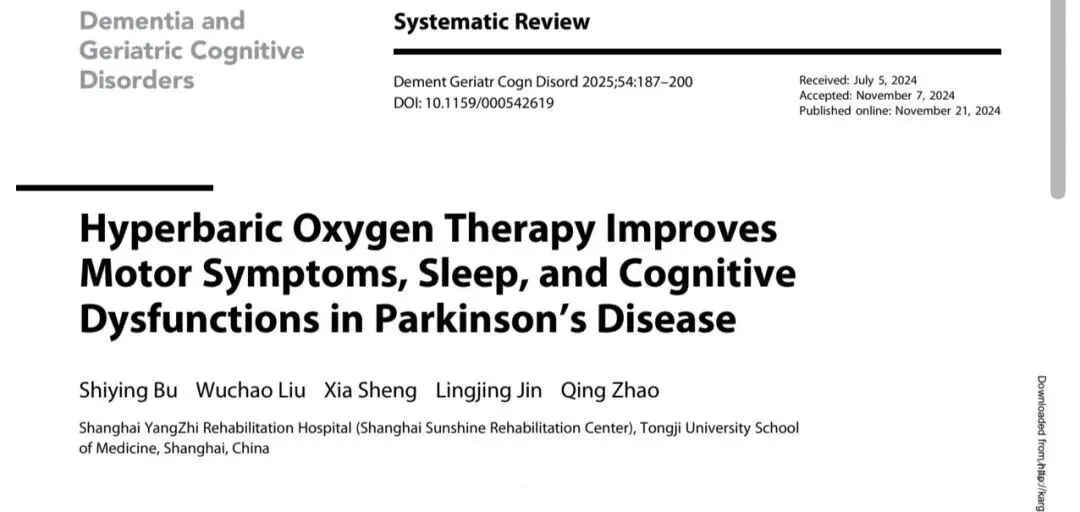
Reference: Bu S, Liu W, Sheng X, Jin L, Zhao Q. Гипербарическая оксигенация улучшает двигательные симптомы, Спать, and Cognitive Dysfunctions in Parkinson's Disease. Dement Geriatr Cogn Disord. 2025;54(3):187-200.
doi: 10.1159/000542619. Epub 2024 Nov 21. PMID: 39571556.
This meta-analysis systematically evaluates the efficacy of Hyperbaric Oxygen Therapy (Хбот) compared to conventional drug therapy in treating Parkinson's Disease (PD).
1.Background
PD is a rapidly progressive neurodegenerative disorder characterized by the loss of dopaminergic neurons. Current treatments cannot slow or halt disease progression. HBOT has shown promise in various conditions and may benefit PD, though its clinical efficacy and mechanisms remain unclear. This study aims to provide an evidence-based assessment of HBOT's role in PD management.
2. Methods
Search Strategy: Databases including PubMed, Web of Science, Cochrane Library, CNKI, and Wanfang were searched up to March 2023 for RCTs published in English or Chinese.
Study Selection: 13 RCTs involving 958 PD patients (496 in HBOT groups, 462 в контрольных группах) from China (1995-2022) were included after screening 262 potential studies.
3.Key Findings
Motor Function: HBOT groups showed significantly greater improvement in UPDRS-III scores and Hoehn & Yahr staging compared to controls.
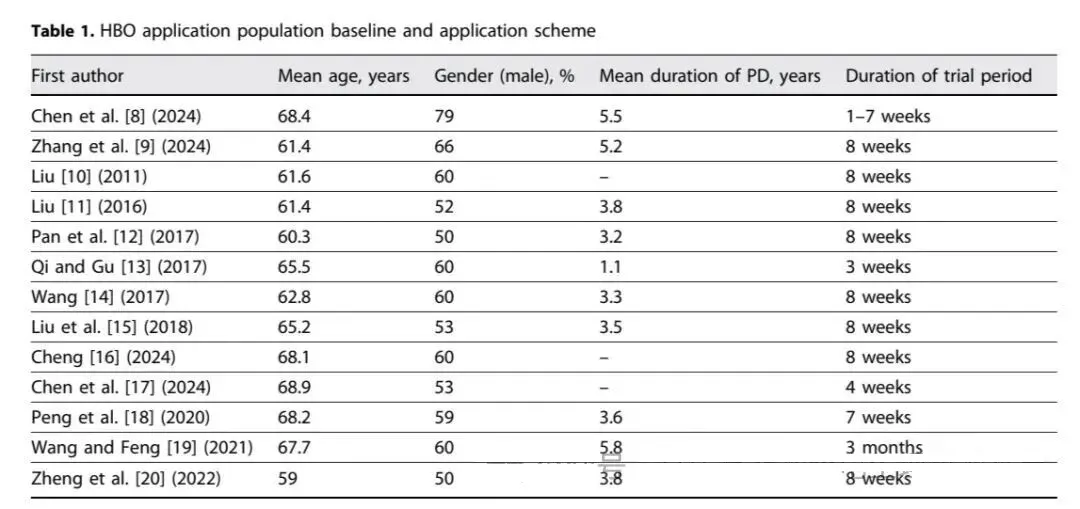
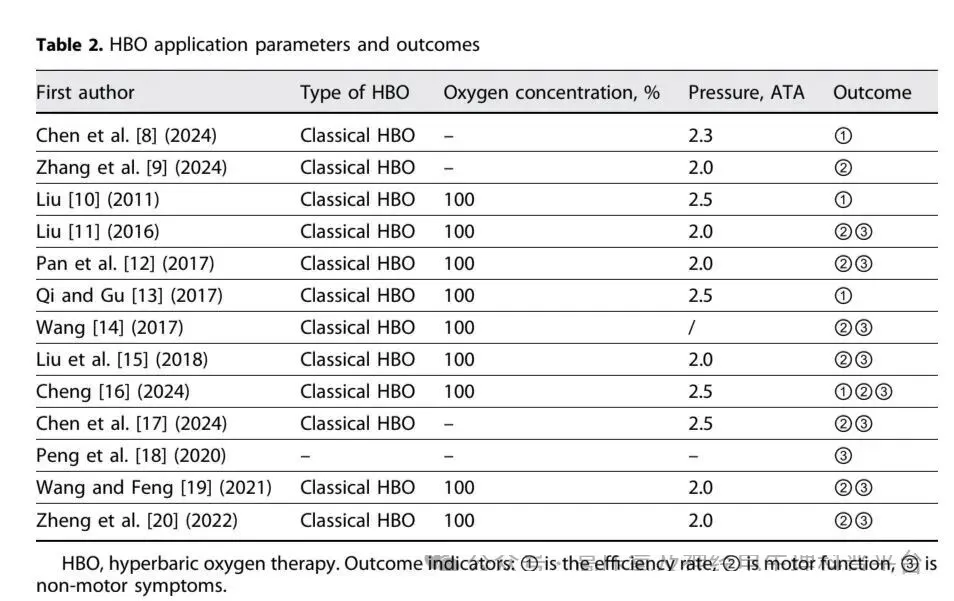
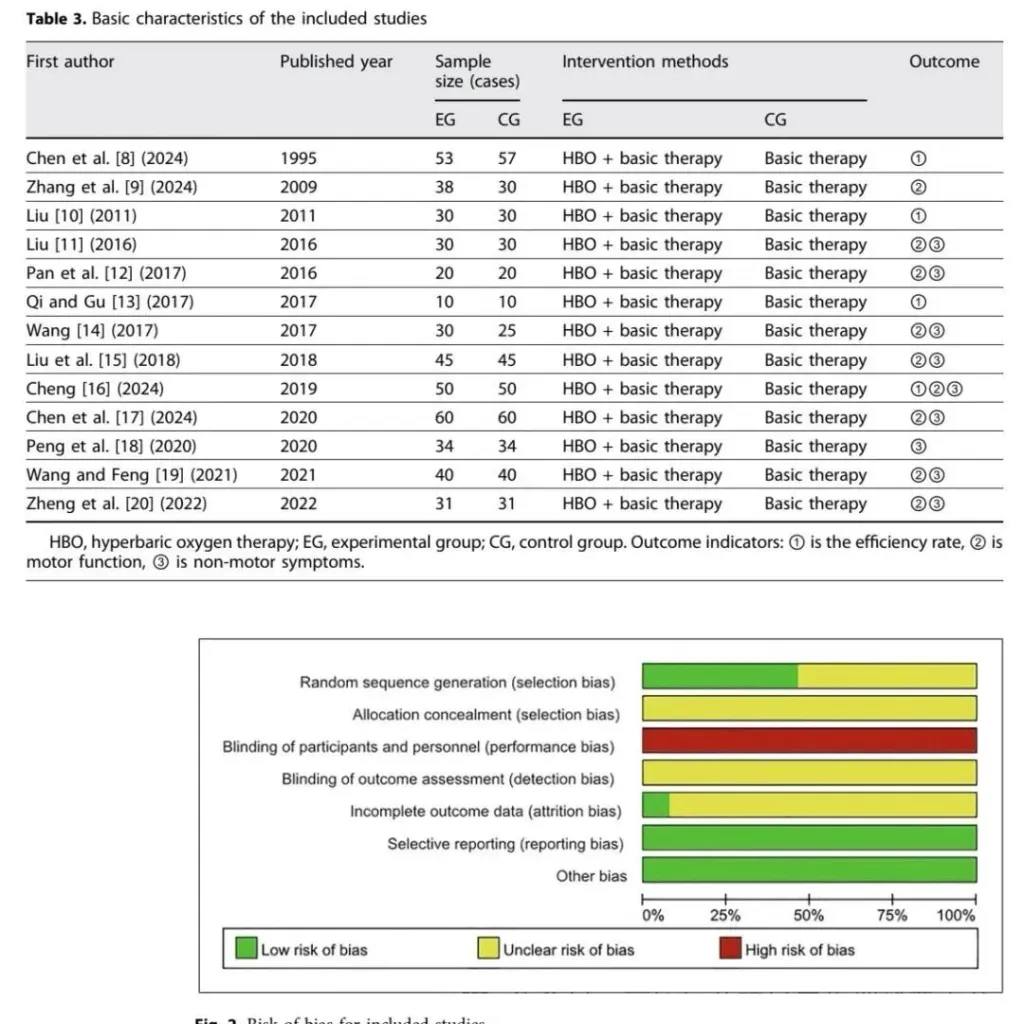
Non-Motor Symptoms: Significant benefits were observed in MoCA (cognition), PSQI (sleep quality), and ESS (excessive daytime sleepiness) scores.
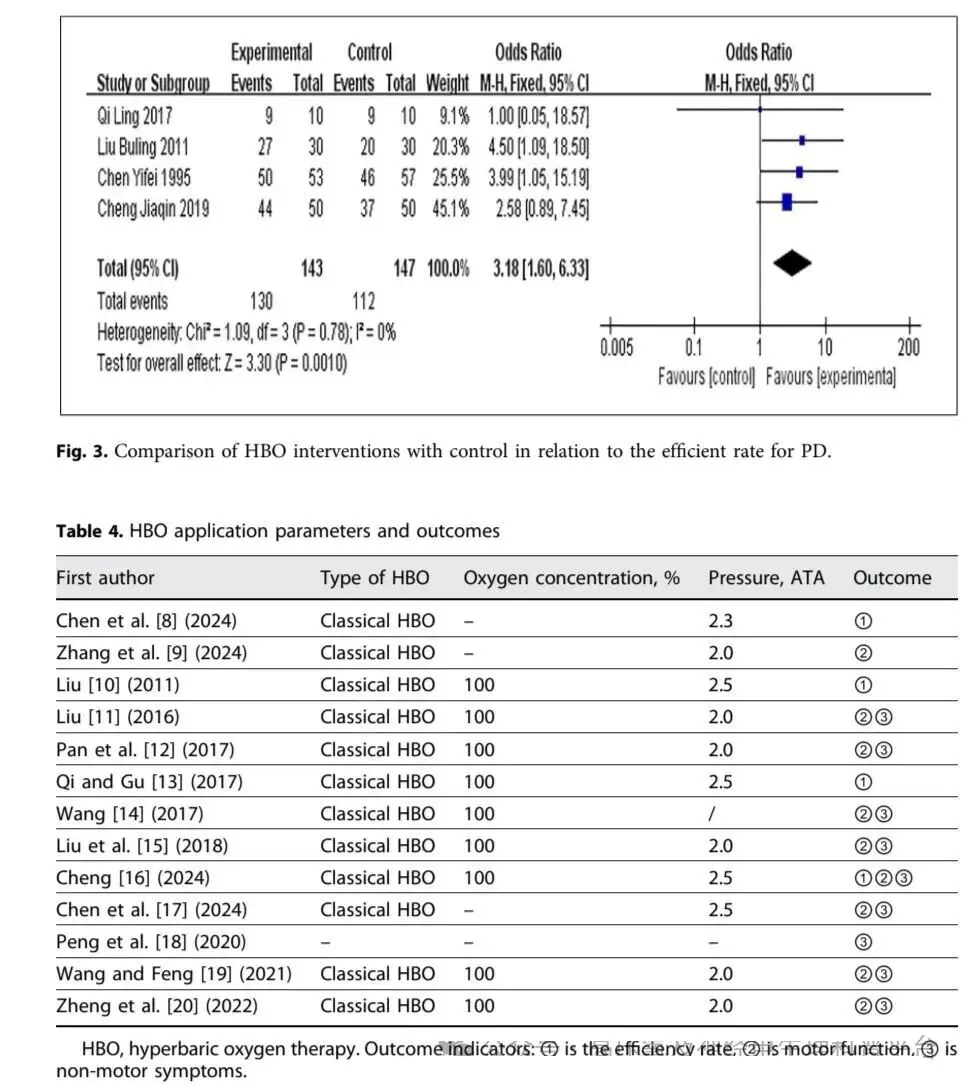
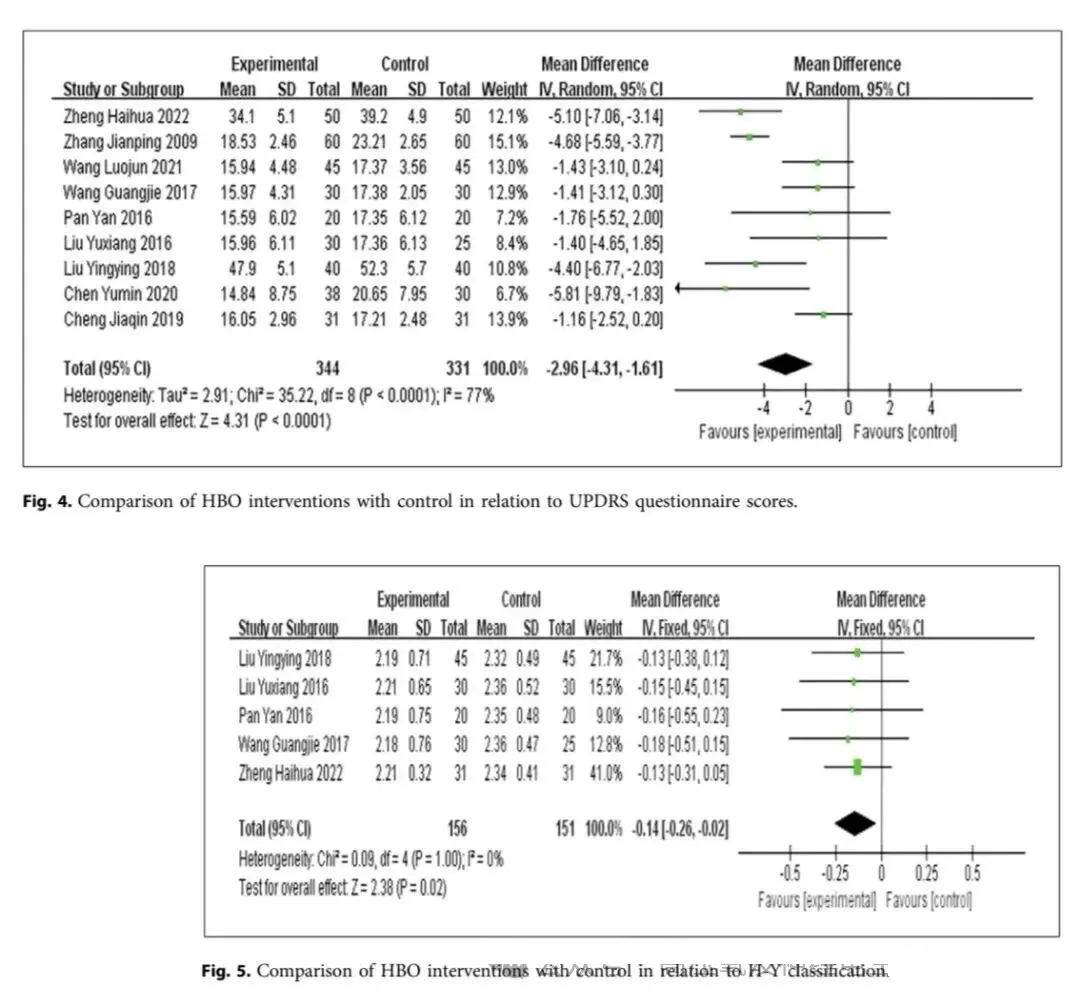
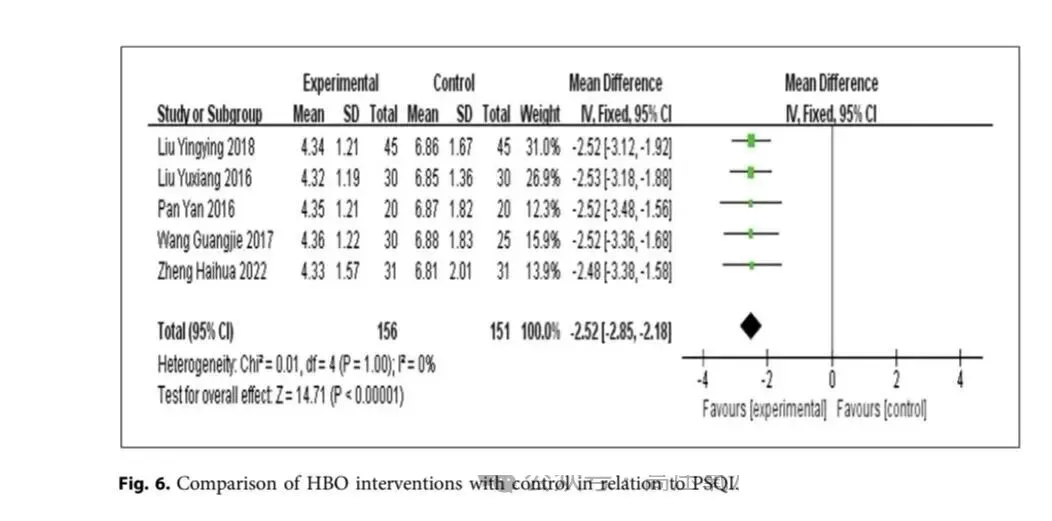
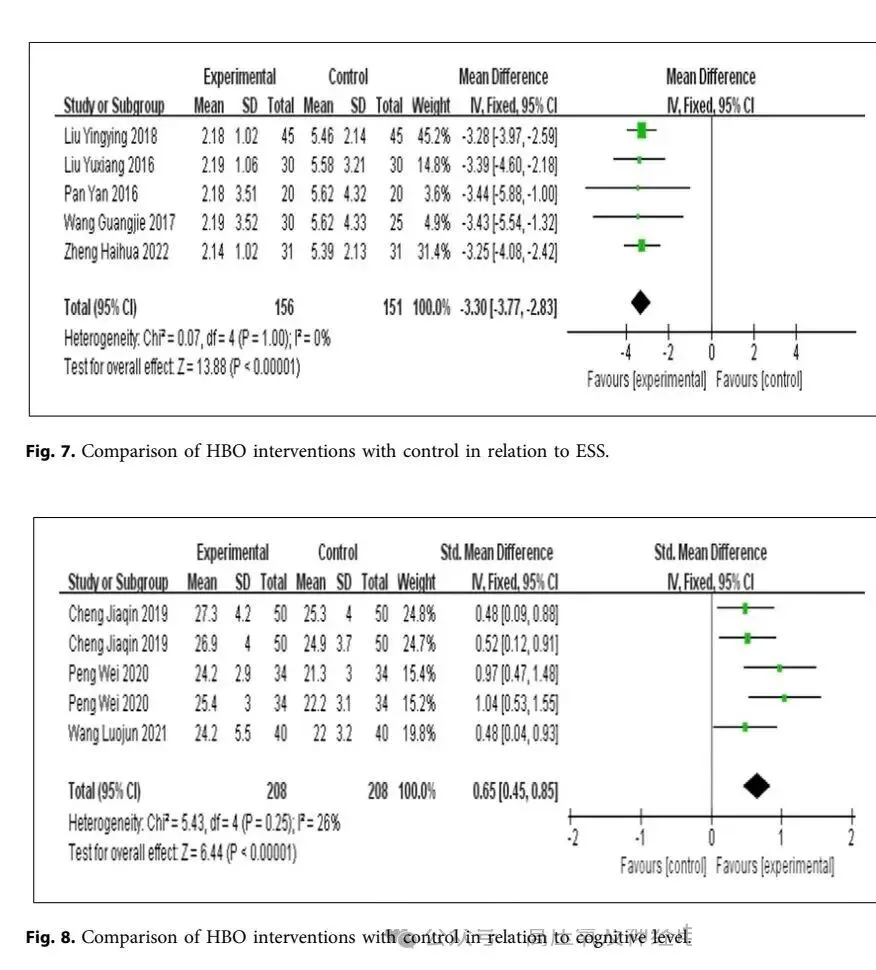
Safety: Adverse events were reported in 3 studies but with no statistically significant difference from controls.
- Discussion
HBOT is established for conditions like stroke and traumatic brain injury and is now being explored for neurodegenerative diseases. Potential mechanisms for PD include increasing cerebral oxygen levels, reducing inflammation, apoptosis, and oxidative stress, thereby protecting dopaminergic neurons. Study limitations include challenges in blinding and limited sample size, calling for larger, multi-center trials.
5. Заключение
① HBOT can improve motor symptoms, reduce daytime sleepiness, and enhance cognitive function in PD patients.
② HBOT may slow PD progression through multiple neuroprotective mechanisms.
Current HBOT Protocol for PD (Based on Clinical Experience)
While no universal standard exists, the following commonly used protocol serves as a practical reference:
- Frequency & Duration
Frequency: Typically once daily.
Session Length: Commonly 40-90 minutes per session.
- Pressure Range
Standard Pressure: 1.3 - 2.0 АТА.
For Tremor-Dominant PD: May use 1.8 - 2.0 АТА.
- Treatment Course Structure
A common regimen is 2.0 АТА, once daily, 10 sessions per course, with 2-5 courses recommended initially. For sustained effect, 4-6 maintenance cycles per year are suggested (Например.., 10–20 sessions quarterly). Protocols should be personalized based on patient response and tolerance.
IV. Combined Therapy
With Medication: HBOT is anadjunct to standard PD drugs (Например.., Levodopa), not a replacement.
With Rehabilitation: Can be combined with physical, balance, or speech therapy for enhanced functional recovery.
V. Important Considerations
Pre-treatment Assessment: Includes neuroimaging, ECG, and pulmonary function tests.
Monitoring: Vital signs, neurological status, and motor symptoms must be closely monitored during sessions.
Adverse Reactions: Treatment should be stopped immediately for symptoms like headache, nausea, visual disturbance, or seizures, with prompt medical evaluation.
Article Source: Compiled by FQ, HFLJ | Гипербарический кислород & Neuroelectrophysiology Science Platform
Reference: Bu S, Liu W, Sheng X, Jin L, Zhao Q. Гипербарическая оксигенация улучшает двигательные симптомы, Спать, and Cognitive Dysfunctions in Parkinson's Disease. Dement Geriatr Cogn Disord. 2025;54(3):187-200.
doi: 10.1159/000542619. Epub 2024 Nov 21. PMID: 39571556.
This meta-analysis systematically evaluates the efficacy of Hyperbaric Oxygen Therapy (Хбот) compared to conventional drug therapy in treating Parkinson's Disease (PD).
1.Background
PD is a rapidly progressive neurodegenerative disorder characterized by the loss of dopaminergic neurons. Current treatments cannot slow or halt disease progression. HBOT has shown promise in various conditions and may benefit PD, though its clinical efficacy and mechanisms remain unclear. This study aims to provide an evidence-based assessment of HBOT's role in PD management.
2. Methods
Search Strategy: Databases including PubMed, Web of Science, Cochrane Library, CNKI, and Wanfang were searched up to March 2023 for RCTs published in English or Chinese.
Study Selection: 13 RCTs involving 958 PD patients (496 in HBOT groups, 462 в контрольных группах) from China (1995-2022) were included after screening 262 potential studies.
3.Key Findings
Motor Function: HBOT groups showed significantly greater improvement in UPDRS-III scores and Hoehn & Yahr staging compared to controls.
Non-Motor Symptoms: Significant benefits were observed in MoCA (cognition), PSQI (sleep quality), and ESS (excessive daytime sleepiness) scores.
Safety: Adverse events were reported in 3 studies but with no statistically significant difference from controls.
- Discussion
HBOT is established for conditions like stroke and traumatic brain injury and is now being explored for neurodegenerative diseases. Potential mechanisms for PD include increasing cerebral oxygen levels, reducing inflammation, apoptosis, and oxidative stress, thereby protecting dopaminergic neurons. Study limitations include challenges in blinding and limited sample size, calling for larger, multi-center trials.
5. Заключение
① HBOT can improve motor symptoms, reduce daytime sleepiness, and enhance cognitive function in PD patients.
② HBOT may slow PD progression through multiple neuroprotective mechanisms.
Current HBOT Protocol for PD (Based on Clinical Experience)
While no universal standard exists, the following commonly used protocol serves as a practical reference:
- Frequency & Duration
Frequency: Typically once daily.
Session Length: Commonly 40-90 minutes per session.
- Pressure Range
Standard Pressure: 1.3 - 2.0 АТА.
For Tremor-Dominant PD: May use 1.8 - 2.0 АТА.
- Treatment Course Structure
A common regimen is 2.0 АТА, once daily, 10 sessions per course, with 2-5 courses recommended initially. For sustained effect, 4-6 maintenance cycles per year are suggested (Например.., 10–20 sessions quarterly). Protocols should be personalized based on patient response and tolerance.
IV. Combined Therapy
With Medication: HBOT is anadjunct to standard PD drugs (Например.., Levodopa), not a replacement.
With Rehabilitation: Can be combined with physical, balance, or speech therapy for enhanced functional recovery.
V. Important Considerations
Pre-treatment Assessment: Includes neuroimaging, ECG, and pulmonary function tests.
Monitoring: Vital signs, neurological status, and motor symptoms must be closely monitored during sessions.
Adverse Reactions: Treatment should be stopped immediately for symptoms like headache, nausea, visual disturbance, or seizures, with prompt medical evaluation.
Article Source: Compiled by FQ, HFLJ | Гипербарический кислород & Neuroelectrophysiology Science Platform
Привет, Я Мэйси-Пэн
1# Производитель гипербарических кислородных камер в Китае. 18 многолетний опыт работы в отрасли. 126 страны и регионы достигли
